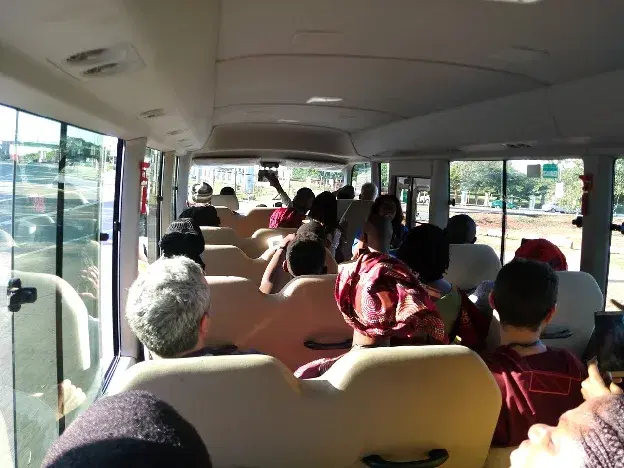
Most people who lose money in the Nigerian transport business do not lose it dramatically. There is no single bad day. The bus goes out, the bus comes back, the driver hands over the day's delivery, and everybody says the business is moving.
Then the gearbox goes. And suddenly there is no money anywhere, for a business that has been "profitable" for eleven months.
That is the whole problem in one sentence: most bus owners track revenue, not cost. The money didn't disappear. It was never profit in the first place.
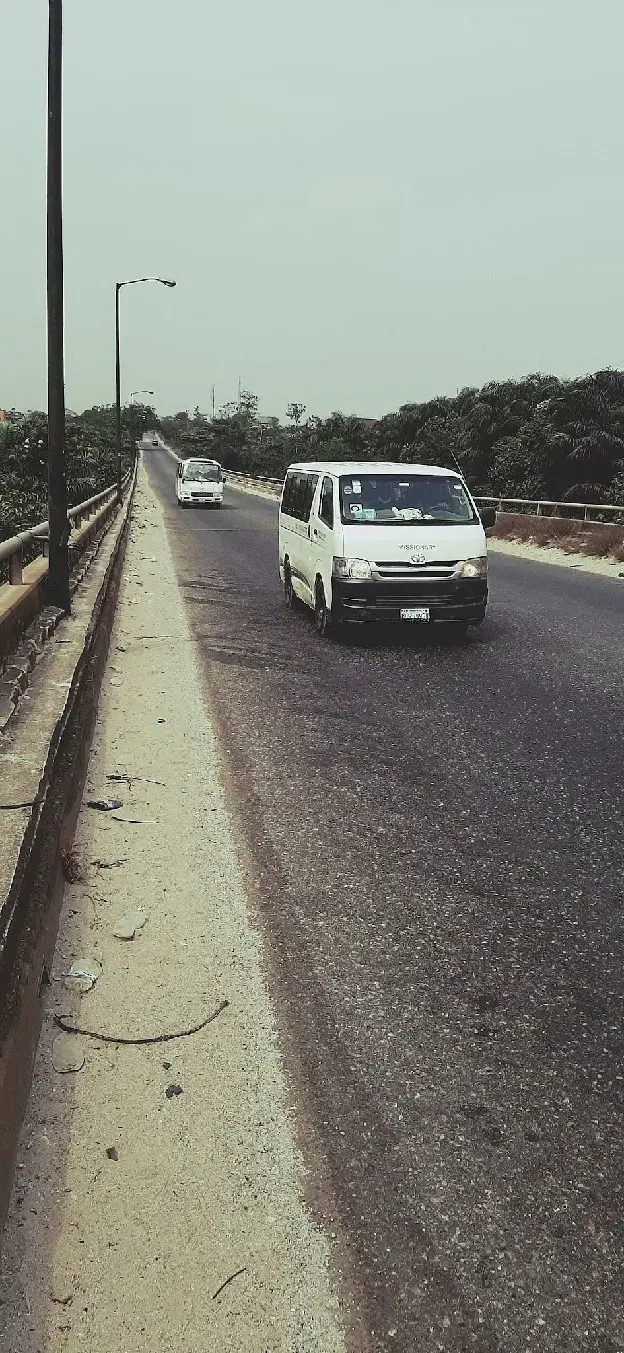
Revenue is visible every evening. Cost is invisible until it isn't. Photo via Wikimedia Commons, CC BY-SA 4.0.
Here are the leaks, in the order they usually kill people.
Leak 1: You are measuring per day instead of per kilometre
The daily delivery model — driver keeps the surplus, owner gets a fixed figure — is popular because it's simple. It is also the single best way to hide what a vehicle actually costs to run.
A fixed daily delivery doesn't move when fuel moves. And fuel has been moving violently. Petrol in Abuja was around ₦1,299 per litre in early August 2026 after successive cuts by NNPC and Dangote — but only weeks earlier, in late May 2026, drivers in Abuja were dealing with pump prices reported between ₦1,364 and ₦1,440. Same route, same bus, wildly different economics.
What to do instead: calculate cost per kilometre, and recalculate it monthly.
Cost per km = (Fuel + Maintenance + Tyres + Driver + Levies + Depreciation + Insurance) ÷ km driven
If you don't know your cost per kilometre, you don't know whether your fare is a price or a donation.
Leak 2: Depreciation is a real cost that never sends an invoice
Your bus is being consumed. Every trip converts a chunk of the vehicle into cash, and if you don't set that cash aside, you are not running a business — you are slowly selling your asset and calling the proceeds profit.
The replacement number is brutal. A Toyota Coaster in Nigeria runs anywhere from around ₦45 million for older used units to well over ₦100 million for newer ones, depending on year, condition, capacity and exchange rate.
What to do: treat replacement as a monthly bill. Pick a realistic life — say five years of hard commercial use — divide the replacement cost by the number of months, and move that amount into a separate account every single month. Untouchable. If the business can't afford that transfer, the business is not profitable; it just feels profitable.
Leak 3: Deferred maintenance is a loan at a terrible interest rate
Every mechanic in Nigeria will tell you the same thing, and reporting from motor parks across the country confirms it: operators are stretching tyres and parts far past the point they should have been replaced, because parts and servicing costs have climbed sharply.
Deferring maintenance feels like saving ₦80,000. It is actually borrowing ₦80,000 against a future repair that will cost several times more, plus the days off the road while it's being fixed, plus the risk to human life.
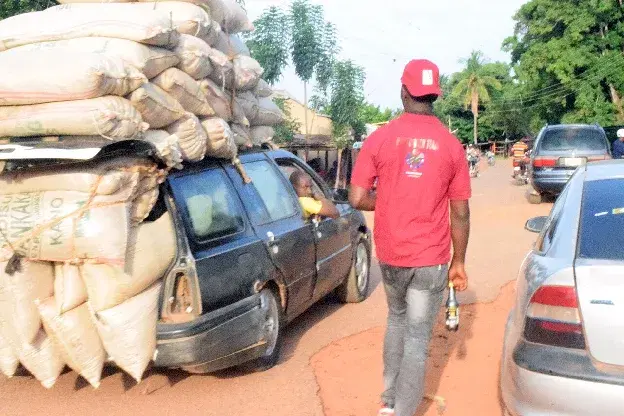
Overloading raises revenue per trip and destroys suspension, tyres and brakes faster than the extra fare covers. Photo via Wikimedia Commons, CC BY-SA 4.0.
What to do: run maintenance on a schedule, not on symptoms. Fixed intervals for oil, filters, brakes, tyre rotation. Keep a simple logbook per vehicle — date, kilometres, what was done, what it cost. It costs nothing and it is the difference between managing a fleet and reacting to one.
Leak 4: Time lost in traffic is money, and nobody bills for it
A bus sitting in gridlock is burning fuel, paying a driver, depreciating, and earning nothing. Academic work on Lagos bus operators has looked specifically at how prolonged, unpredictable travel time eats into operators' monthly margins by cutting the number of trips completed per day.
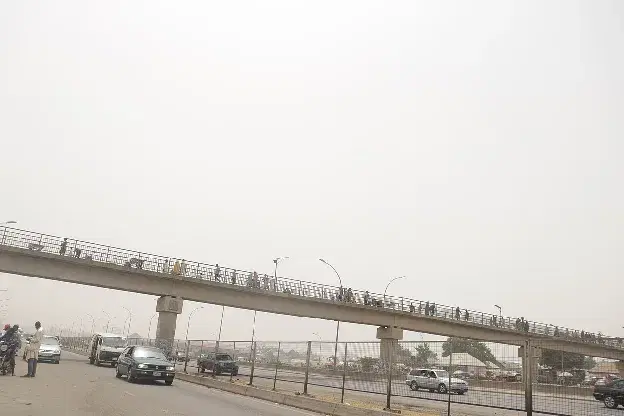
In Abuja, this is the whole game. The city's three main entry corridors — Nyanya–Mararaba, Kubwa Expressway and Airport Road/Lugbe — carry a daily tide of commuters into the centre and back out, and they choke at both ends of the day.
What to do: count trips per day per vehicle, not just naira per day. If a route yields four trips instead of six, the route is 33% less profitable than it looks, even at a higher fare. Sometimes the answer is a shorter, less glamorous route with faster turnaround.
Leak 5: Cash without records is not revenue, it's an estimate
If your only record is what the driver hands you, you have no business — you have a trust exercise.
Lagos has taken the most aggressive position on this in the country. LAMATA's cashless enforcement, which extended to commuters from 1 August 2026, is explicitly about revenue leakage: the agency's argument is that cash collection starves operators of legitimate income and undermines fleet sustainability. One BRT operator described a driver who ran a full bus and routed the fares into his personal account. Over 19 million trips have been processed on the Cowry Card since January 2026.
You are probably not running a BRT franchise. You can still borrow the principle.
What to do: even a manual system beats no system. Trip sheets. Passenger counts per trip. Fuel receipts. Reconcile weekly. Where possible, move to transfers or a POS-based collection. The point isn't distrust — it's that you cannot manage a number you cannot see.
(Disclosure: this is the problem we work on. Pathy is building payment and data infrastructure for Nigerian public transport, starting with estate shuttles in Abuja. We're pre-launch, so take that as context for the argument rather than a recommendation — but the underlying point stands whether you use a notebook or software.)
Leak 6: You may be paying a petrol tax you don't have to pay
This is the biggest single lever available to Nigerian operators right now, and most small operators still haven't pulled it.
The Presidential CNG Initiative reports over 120,000 vehicles converted, and the programme's stated savings range is roughly 40–70% on fuel costs for road transport operators. On the ground, the difference is stark: one Lagos tricycle operator profiled in 2026 reported spending around ₦3,700 a day on CNG versus roughly ₦16,000 daily on petrol.
The catch is real and you should price it honestly:
- Conversion cost: roughly ₦500,000–₦900,000 for minibuses, and up to ₦1–1.7 million for heavy commercial buses, depending on kit and cylinders. Subsidised and in some cases free conversions have been available for eligible commercial vehicles and union members.
- Refuelling coverage: still the weak point. Stations are concentrated, and running dry on a route with no station is an expensive lesson.
- Do the payback maths yourself: (monthly petrol spend − projected CNG spend) ÷ conversion cost = months to break even. Many operators report recovering the investment within 6–12 months of consistent use.
If your route has reliable CNG access, this is not a green gesture. It is the largest cost reduction available to you.
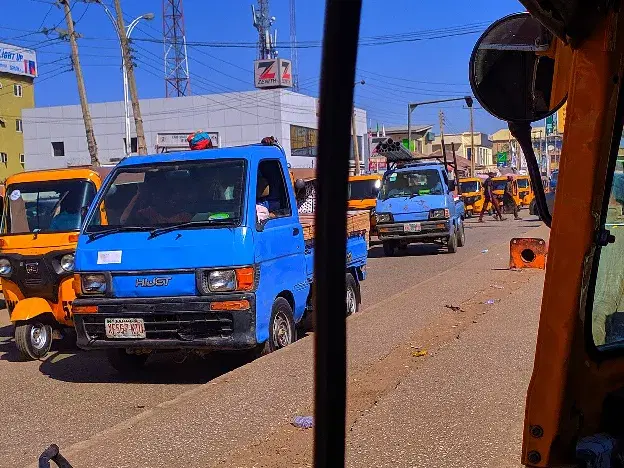
Route choice, turnaround time and fuel type decide profitability long before fare does. Photo via Wikimedia Commons, CC BY-SA 4.0.
Leak 7: Insurance and papers are cheap until the day they aren't
Skipping insurance saves a known small amount and exposes you to an unknown large one. One serious accident — vehicle written off, third-party liability, hospital costs — ends most single-vehicle operations permanently.
Add the FCT dimension: Abuja's Transportation Secretariat is now enforcing operator licensing and impounding non-compliant vehicles, with officials warning that unauthorised loading points will be shut down. Operating informally is no longer just a legal risk; it is an operational one.
Leak 8: Choosing the route by feeling instead of by numbers
Fares vary enormously by geography. NBS state-level data for May 2026 put the highest intra-city bus fares in Zamfara (₦1,878.80) and Taraba (₦1,771.96), and the lowest in Abia (₦890.05) and Adamawa (₦918.47). Regionally, the South-West consistently records the highest intra-city fares.
A "busy" route is not the same as a profitable route. Volume with a low fare, long turnaround and heavy wear can lose to a quieter route with better economics.
The one-page monthly check
Do this every month, per vehicle. It takes twenty minutes.
| Line | Amount |
|---|---|
| Gross revenue | |
| − Fuel / CNG | |
| − Driver & conductor | |
| − Routine maintenance | |
| − Tyres & parts reserve | |
| − Insurance & licensing (monthly share) | |
| − Park fees, levies, tickets | |
| − Replacement reserve (depreciation) | |
| = Real profit |
Also record: kilometres driven, trips completed, days off the road.
If the "real profit" line is negative, you have found the money you didn't know you were losing. It was in the replacement reserve line the whole time — the one most operators leave blank.
The wider picture
None of this is happening in a friendly environment. Nigeria's transport and storage sector grew 7.41% year-on-year in Q1 2026, down sharply from 14.08% in the same quarter a year earlier, with rising operating costs, infrastructure bottlenecks and fuel volatility cited as the squeeze. Meanwhile intra-city fares rose 38.63% year-on-year to May 2026 — which tells you operators are passing costs through, and passengers are absorbing what they can.
The operators who survive this period will not be the ones who charged the most. They will be the ones who knew their cost per kilometre, funded their replacement reserve, and moved their fuel bill before it moved them.
This article is general business information, not financial advice. Run your own numbers against your own routes and vehicles before making investment decisions.
Sources: National Bureau of Statistics Transport Fare Watch (April–May 2026) via Punch, Guardian NG, Nairametrics and Legit.ng; NBS Q1 2026 GDP report via BusinessDay; Legit.ng and Leadership on August 2026 and May 2026 petrol pricing; Presidential CNG Initiative (pci.gov.ng) and TriplePundit on conversion volumes and savings; EnviroNews and NaijaCarLovers on conversion costs; Africonomy/Osilalu Autos on Toyota Coaster pricing; WithinNigeria on motor park maintenance deferral; ResearchGate study on travel delay and Lagos bus operator margins; LAMATA/Technext/Punch on cashless enforcement; TheCable and Daily Post on FCTA operator licensing.